
The Pilates Plan: A Beginner-Friendly Weekly Routine
A beginner Pilates plan is a simple weekly routine that combines controlled Pilates sessions, walking, basic strength work, and recovery without requiring reformer classes, expensive equipment, or hours of free time. Pilates can support posture, balance, flexibility, strength, and body awareness, while walking and resistance training add broader movement and strength support. This guide gives you a realistic seven-day Pilates routine for an ordinary schedule and budget. Start with two short Pilates sessions, a few walks, and one optional strength session. The goal is not a perfect body or a punishing program. The goal is a calmer, stronger routine you can repeat.
What a Beginner Pilates Plan Is
A beginner Pilates plan is a weekly movement structure designed to help you build consistency, learn controlled exercise, and feel more confident in your body.
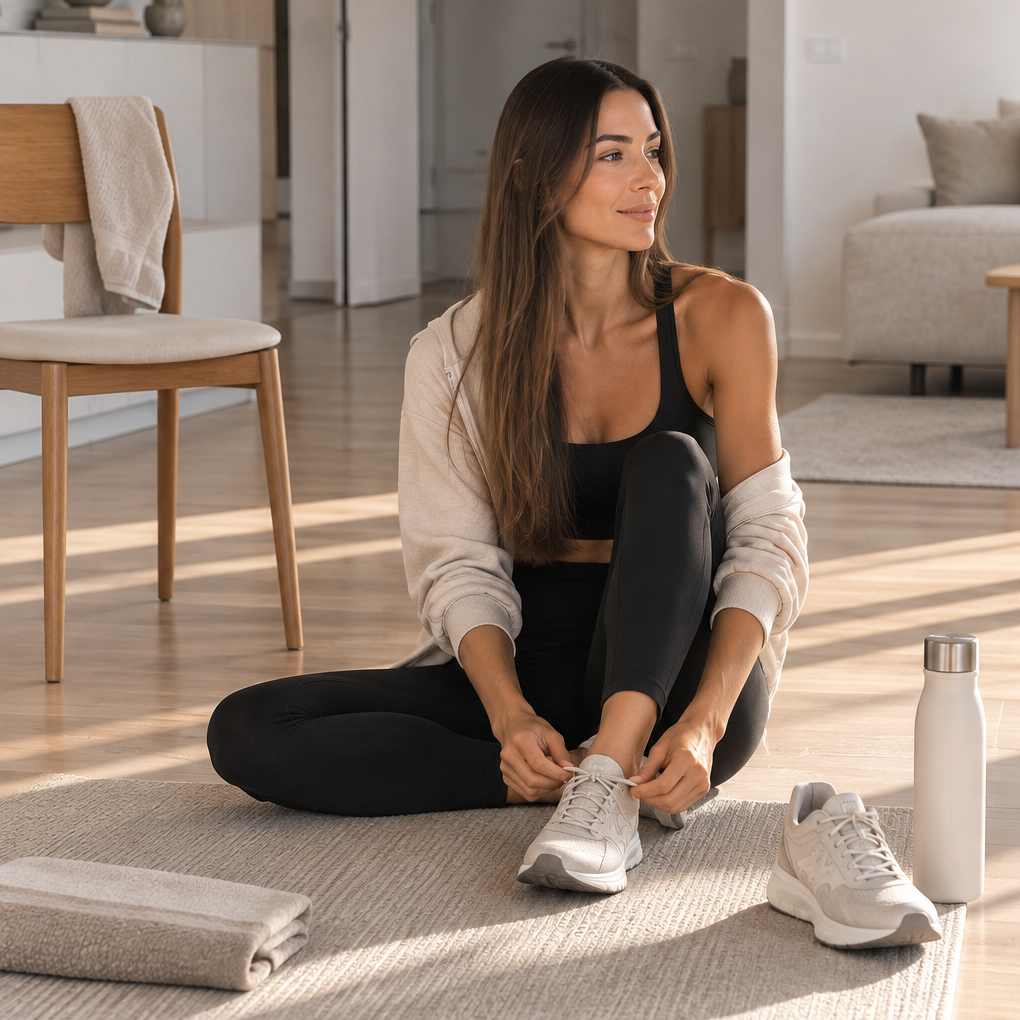
Pilates is often associated with expensive studios, reformer classes, matching activewear, and highly toned instructors. Those things are not required. You can start with a mat, a folded towel, supportive clothes, a small clear space, and a realistic expectation of what a new routine can look like.
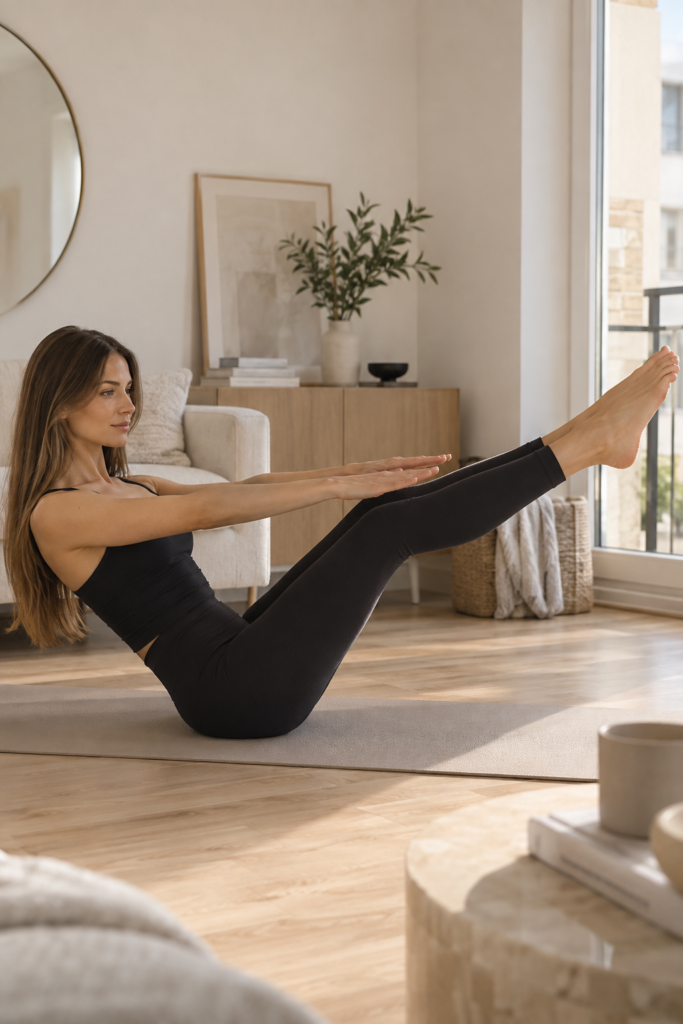
Pilates is a form of exercise that commonly focuses on posture, balance, flexibility, strength, controlled movement, and body awareness. The NHS includes Pilates among its exercise resources for beginners and describes it as an activity that focuses on balance, posture, strength, and flexibility.
A good Pilates plan is not about doing the hardest workout possible. It is about creating a weekly rhythm you can continue after the excitement of a new start disappears.
I believe beginners do best when they stop trying to prove they are motivated and start building a routine that works on an ordinary Wednesday evening.
Article contains Affiliate links
For the wider lifestyle structure behind movement, food, beauty, wardrobe, and consistency, read The Pilates Body Plan: How to Build a Polished Routine on an Ordinary Salary.
What Pilates Can Support
Pilates can support a stronger, more mobile, and more controlled-feeling body. It may be especially appealing if you want low-impact exercise, enjoy slower movement, spend long hours sitting, or need a home-friendly option.
You may notice improvements in body awareness, mobility, balance, posture habits, and confidence with basic movements as you practice. A once-weekly Pilates study in sedentary young women reported improvements in flexibility, balance, core and abdominal strength, skeletal muscle mass, and body awareness compared with a control group. That study does not guarantee identical results for every person, but it supports the value of a manageable starting routine.
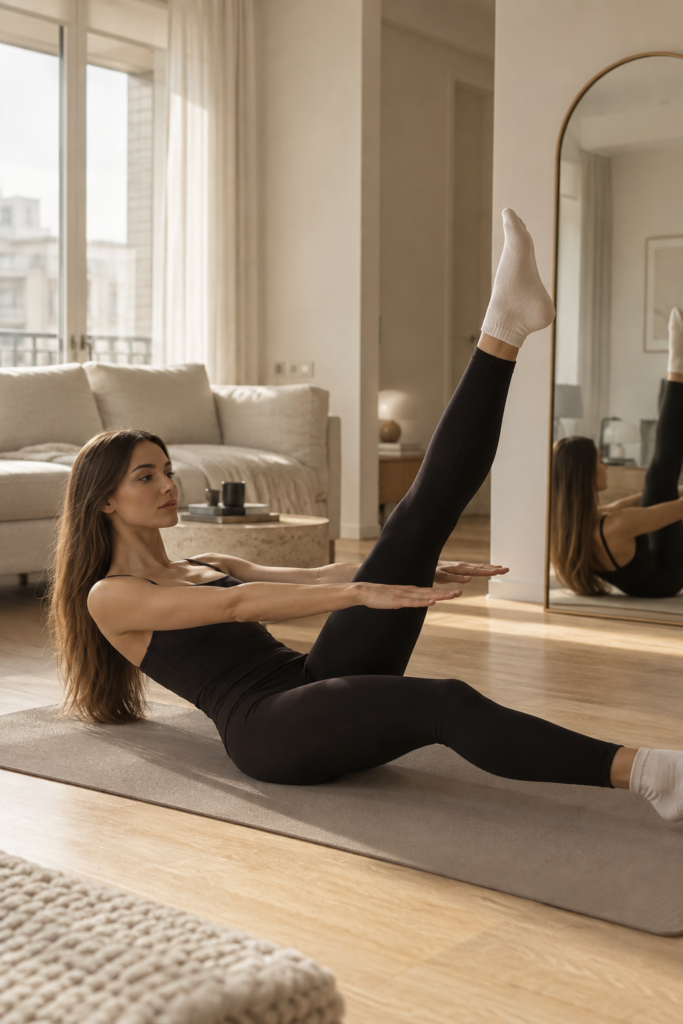
Pilates cannot guarantee weight loss, create one universal “Pilates body,” or spot-reduce fat from your stomach, arms, thighs, or waist. It also cannot replace medical care, rehabilitation, or individualized guidance after an injury.
Think of Pilates as one useful part of a complete routine. It can sit beside walking, basic strength work, regular meals, sleep, and recovery.
Your Beginner Pilates Plan at a Glance
This seven-day plan is designed to help you start without turning exercise into another overwhelming obligation.
The routine includes two Pilates sessions, walking, one optional basic strength session, mobility, and rest. You can shift the days around your work schedule, childcare, commute, energy, and access to space.
| Day | Focus | Beginner Routine | Time |
|---|---|---|---|
| Monday | Walking and reset | Easy walk plus light mobility | 10–20 minutes |
| Tuesday | Pilates | Beginner mat Pilates | 15–20 minutes |
| Wednesday | Walking | Comfortable walk, indoors or outside | 15–30 minutes |
| Thursday | Rest or mobility | Gentle stretching and posture reset | 5–15 minutes |
| Friday | Pilates | Beginner mat Pilates | 15–25 minutes |
| Saturday | Optional strength | Simple bodyweight strength session | 15–20 minutes |
| Sunday | Recovery and planning | Gentle walk, stretching, and weekly planning | 10–30 minutes |
You do not need to complete every line perfectly for this to count as a real routine. The plan is a structure, not a test.
If 20 minutes feels unrealistic, start with 10. If Saturday is busy, skip the optional strength session and take a short walk instead. Your first goal is to make movement feel possible enough to repeat.
Choose Your Beginner Pilates Starting Point
Select the option that fits your current week. Your result gives you a simple starting routine, not a diagnosis or a promised body result.
Monday: Start With a Gentle Walk
Monday movement should make the rest of the week easier, not leave you exhausted.
Start with a 10- to 20-minute walk at a comfortable pace. You can walk before work, during lunch, after dinner, while listening to music, or while calling someone you enjoy talking to.
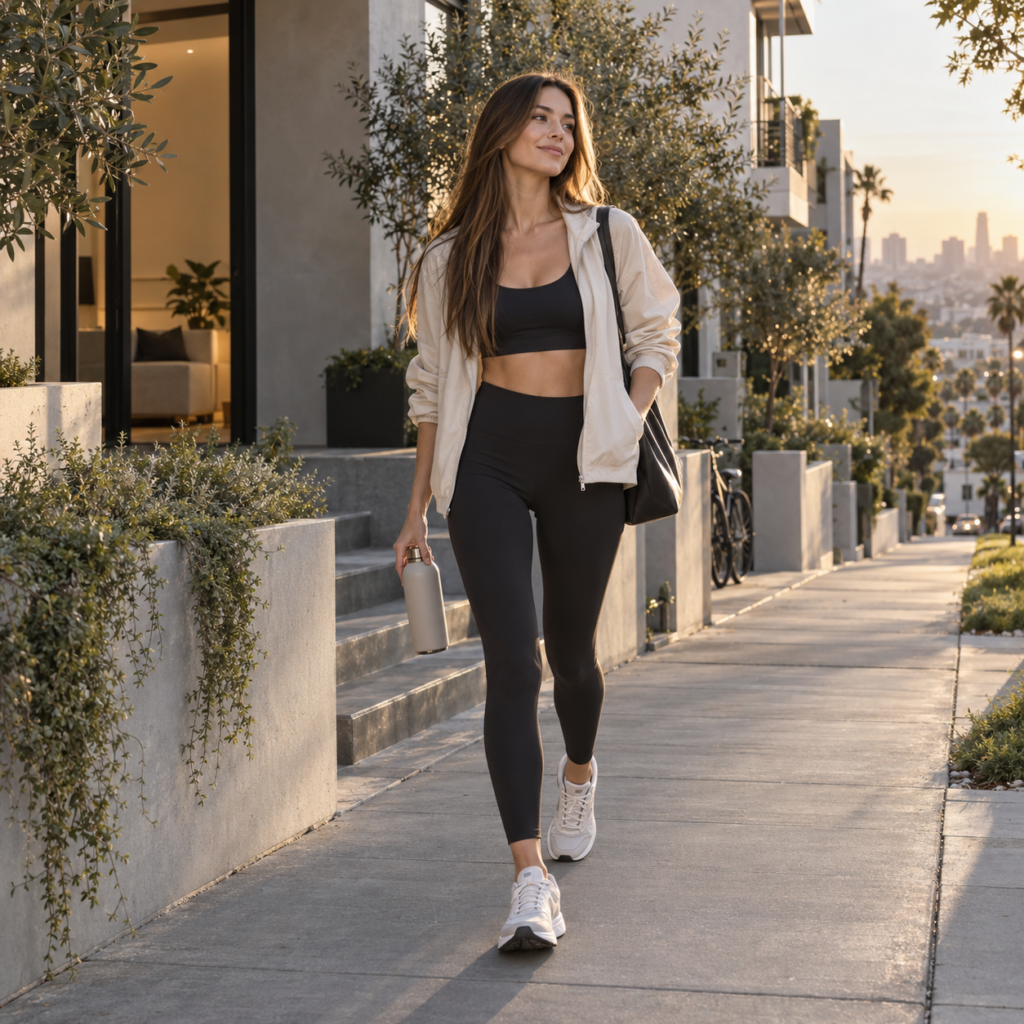
Walking may feel too simple to count, but it is a practical way to build movement into a busy life. The CDC notes that adults can spread physical activity across the week and break it into smaller chunks rather than needing to complete it all at once.
Your Monday walk is not about earning food or punishing yourself for the weekend. It is a quiet signal that your routine has started.
If you want a step-by-step structure for daily movement, read The High-End Body Walking Plan: A Beginner-Friendly Routine for Everyday Fitness.
Tuesday: Complete Your First Pilates Session
Your first Pilates session is about learning control, not chasing intensity.
Choose a beginner mat Pilates class or routine that lasts 15 to 20 minutes. Look for clear instruction, slower pacing, and options for making movements smaller or easier. You should be able to breathe normally and maintain control during each exercise.
A basic beginner session may include:
- Gentle breathing and ribcage awareness
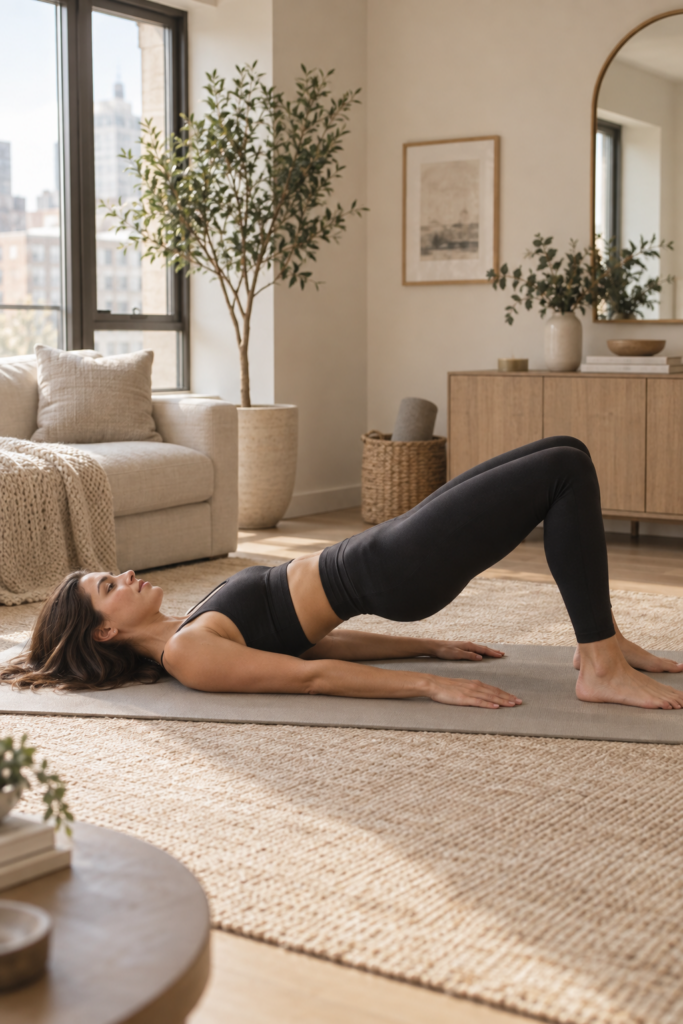
- Pelvic tilts or pelvic curls
- Glute bridges
- Dead bugs or toe taps
- Bird dogs
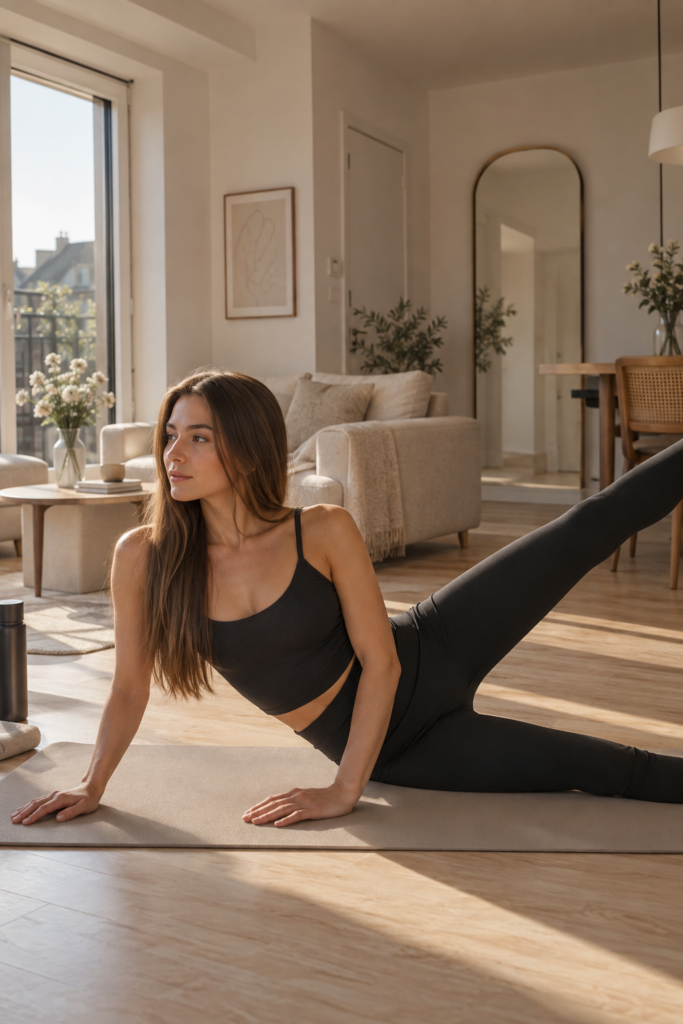
- Side-lying leg movements
- Modified planks
- Child’s pose or gentle spinal mobility
- Light stretching
You do not need to master every exercise. If a movement causes sharp pain, stop. Muscular effort can be normal during exercise, but significant or increasing pain needs attention. An NHS physiotherapy resource notes that Pilates should involve muscular effort, not pain, and advises seeking guidance if pain significantly increases.
Your first session should leave you feeling like you could do it again later in the week.
Wednesday: Add Everyday Movement
Wednesday is a walking day, but it can also become your flexible movement day.
If you have energy, walk for 20 to 30 minutes. If your day is packed, take two short walks instead. You can walk five minutes after lunch, ten minutes after work, and five minutes while waiting for dinner to cook.
The goal is not to hit a perfect number. The goal is to avoid the all-or-nothing mindset that makes beginners stop when life becomes busy.
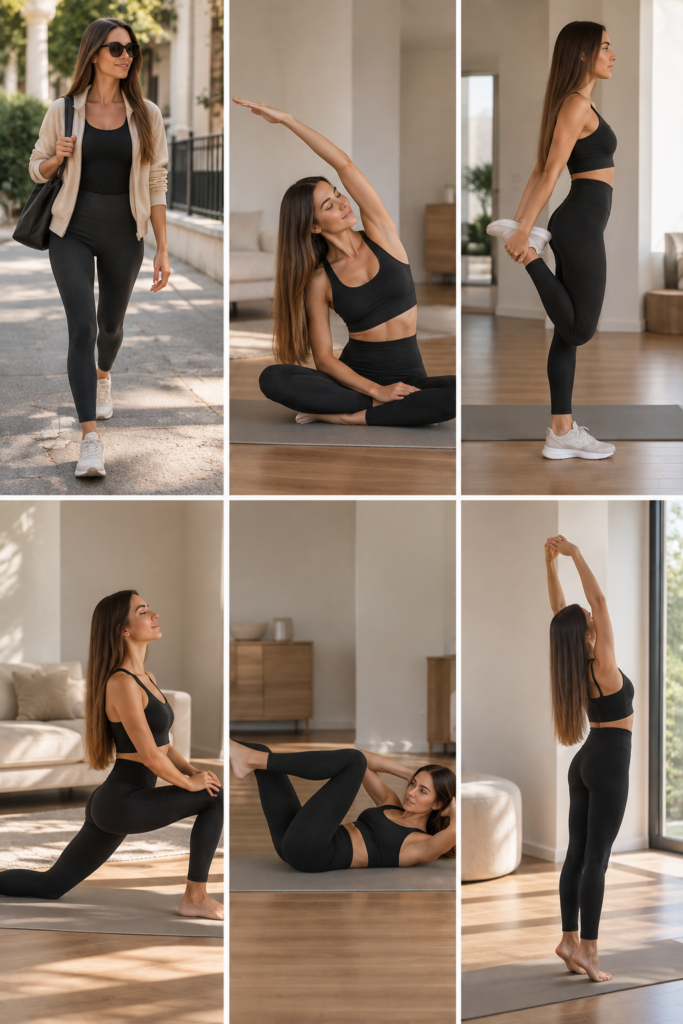
Small movement sessions still matter. The CDC explains that adults benefit from moving more and sitting less, and activity can be accumulated in smaller chunks across the day and week.
Use Wednesday to notice how your body feels after your first Pilates session. Mild muscle soreness can happen when you begin a new routine. Sharp pain, swelling, dizziness, chest pain, unusual shortness of breath, or symptoms that concern you are reasons to stop and seek medical guidance.
Thursday: Rest or Do Five Minutes of Mobility
Rest is part of your Pilates plan.
A beginner routine does not need a workout every day. Your body benefits from time to recover, especially when you are new to regular movement or returning after a long break.
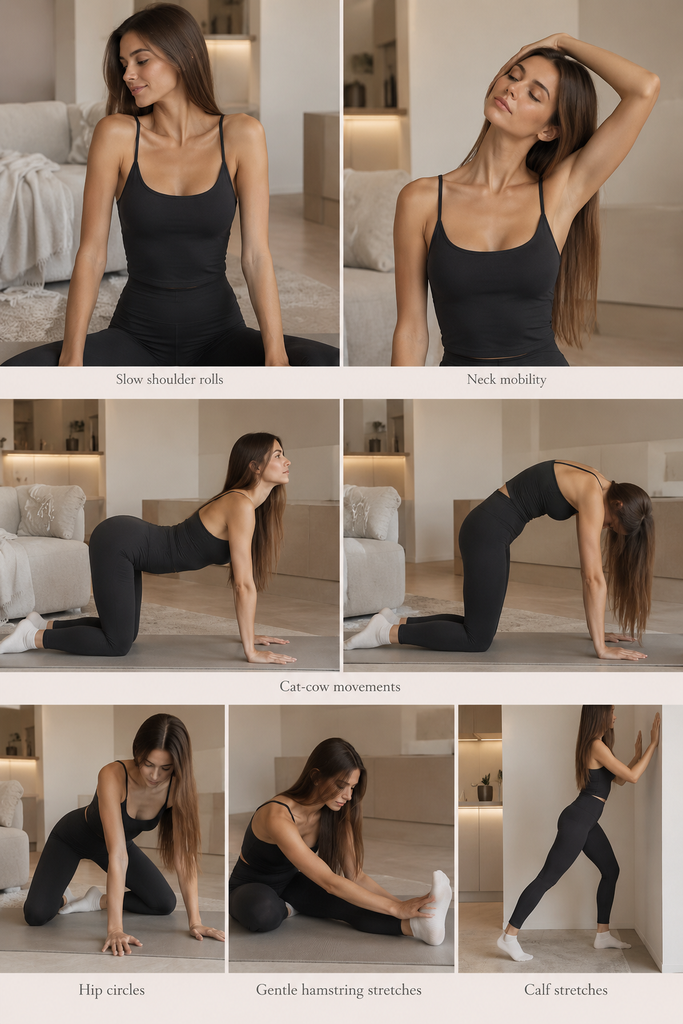
Thursday can be a full rest day. If gentle movement feels good, use five to 15 minutes for mobility:
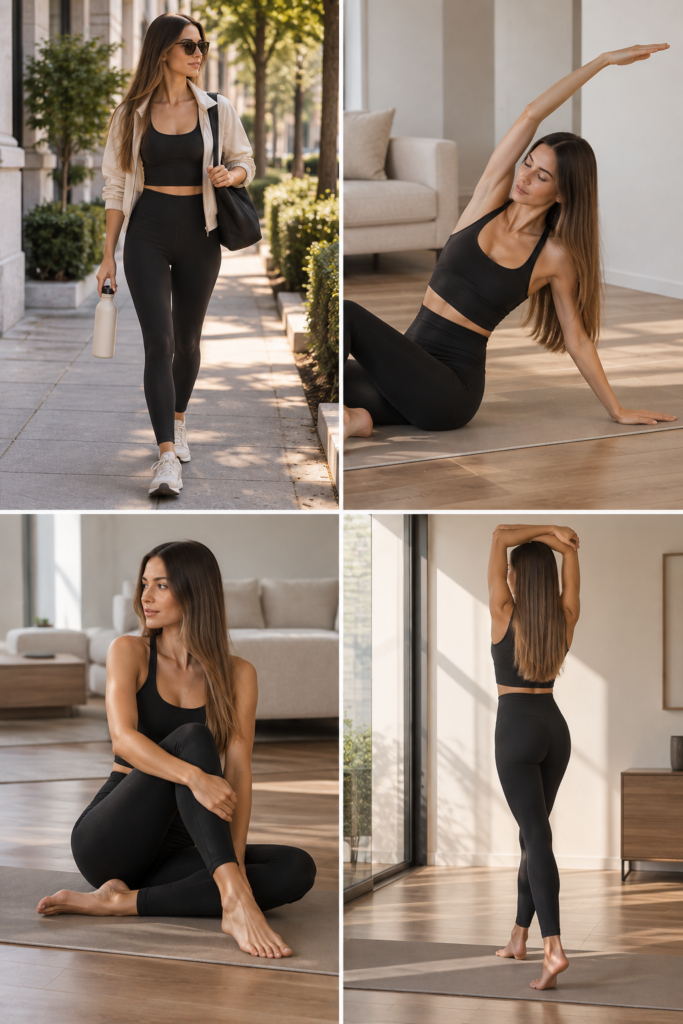
- Slow shoulder rolls
- Neck mobility within a comfortable range
- Cat-cow movements
- Hip circles
- Gentle hamstring stretches
- Calf stretches
- A short walk around your home or neighborhood
Do not use mobility as punishment for being stiff. Use it as a way to reconnect with your body after work, sitting, commuting, or stress.
Friday: Complete Your Second Pilates Session
Your second Pilates session reinforces the habit you began on Tuesday.
Choose another beginner mat routine for 15 to 25 minutes. You can repeat Tuesday’s session if it felt good. Repeating movements is not boring when you are learning technique. It gives you a chance to notice what feels more stable, where you need more support, and how your breathing changes when you slow down.
Focus on quality over complexity.
Try to notice:
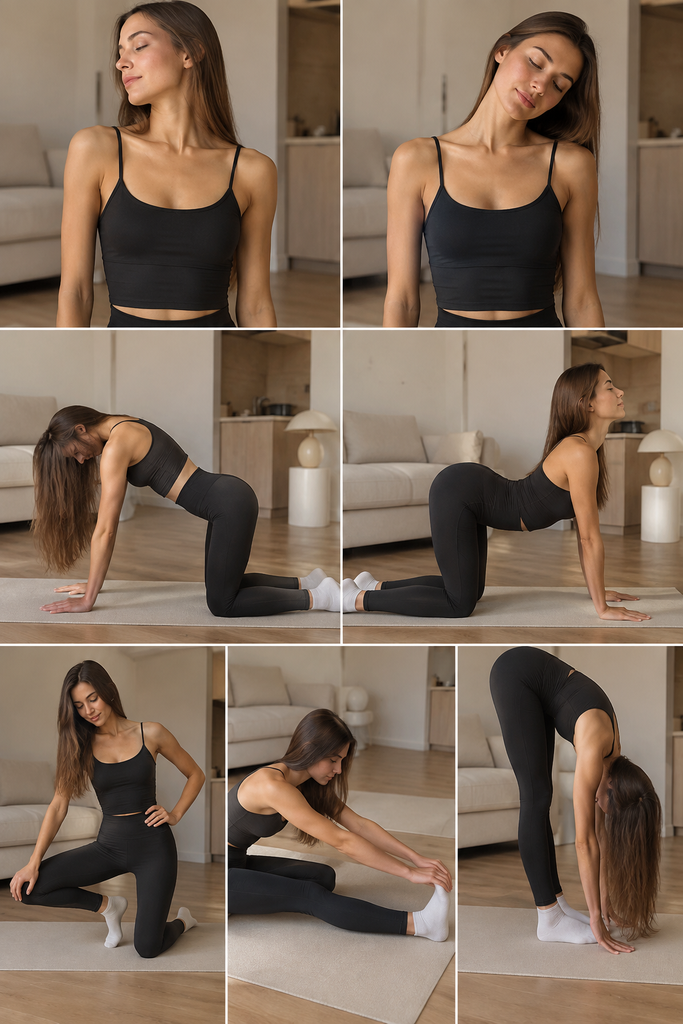
- Can you keep your neck relaxed?
- Can you breathe without holding tension in your shoulders?
- Can you make the movement smaller and more controlled?
- Can you use a modification without judging yourself?
- Can you stop before your form becomes rushed?
Pilates can help you develop more body awareness, but body awareness should never turn into body criticism. Your workout is not a daily inspection of everything you want to change. It is time to build capability.
For a complete home-focused approach, read Rich Girl Pilates at Home: A Low-Cost Routine for Strength, Mobility and Posture.
Saturday: Add Optional Basic Strength Work
Saturday strength work is optional, but it can create a more balanced plan over time.
Pilates can challenge your muscles, especially at the beginning. Still, adults benefit from muscle-strengthening activity that works major muscle groups. The CDC recommends at least two days a week of muscle-strengthening activities for adults, alongside regular aerobic activity.
You do not need a gym membership to begin. Start with bodyweight movements or a low-cost resistance band.
A simple 15- to 20-minute beginner session can include:
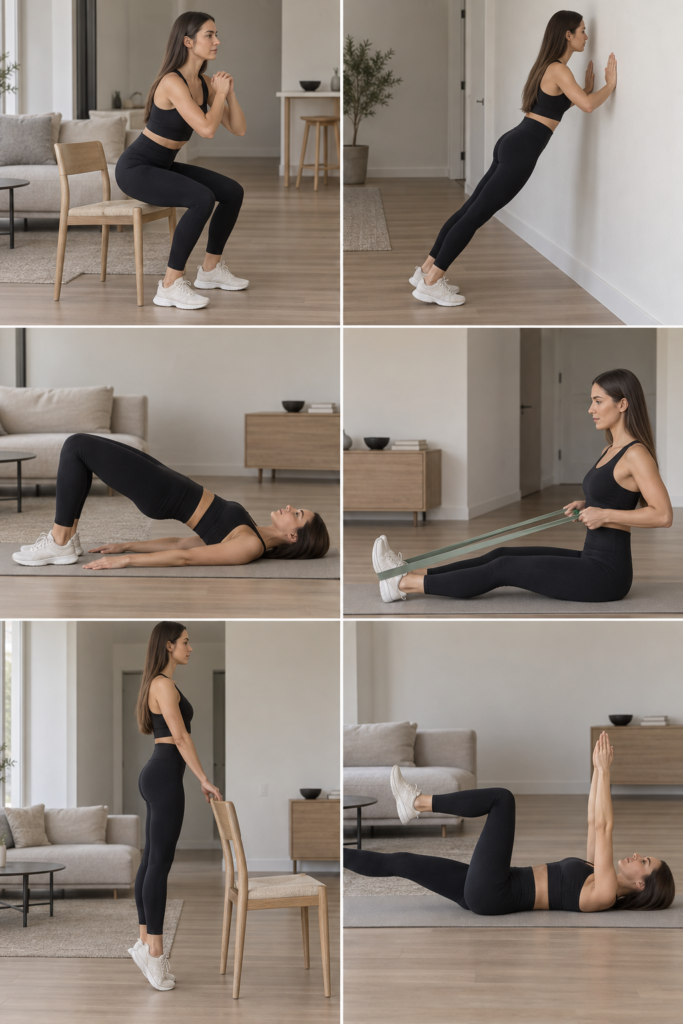
- Chair sit-to-stands for legs
- Wall push-ups for upper body
- Glute bridges for hips and glutes
- Supported rows with a resistance band for back muscles
- Calf raises while holding a chair for balance
- Dead bugs for controlled core work
Choose one set of a manageable number of repetitions. Rest as needed. Your first goal is to learn the movement and make strength work feel safe and accessible.
Sunday: Recover, Plan, and Make Next Week Easier
Sunday recovery is a routine-supporting reset, not a day to make up for everything you missed.
Take a gentle walk, stretch if it feels good, prepare a few easy food options, wash workout clothes, fill your water bottle, and put your next two Pilates sessions into your calendar.
This is where you make next week easier for your future self.
A simple Sunday reset can include:
- Looking at your work schedule
- Choosing two realistic Pilates windows
- Setting out a mat or clearing floor space
- Planning two walks around commitments
- Preparing one easy breakfast, lunch, or snack option
- Checking that your workout clothes are clean and comfortable
- Choosing one recovery habit, such as an earlier bedtime
For a complete weekly reset structure, read The High-End Body Sunday Reset: Plan Your Money, Meals, Movement and Self-Care.
How to Make the Plan Work on a Tight Budget
A beginner Pilates plan does not need expensive equipment, studio memberships, luxury workout clothes, or a home reformer.
Start with the free version first:
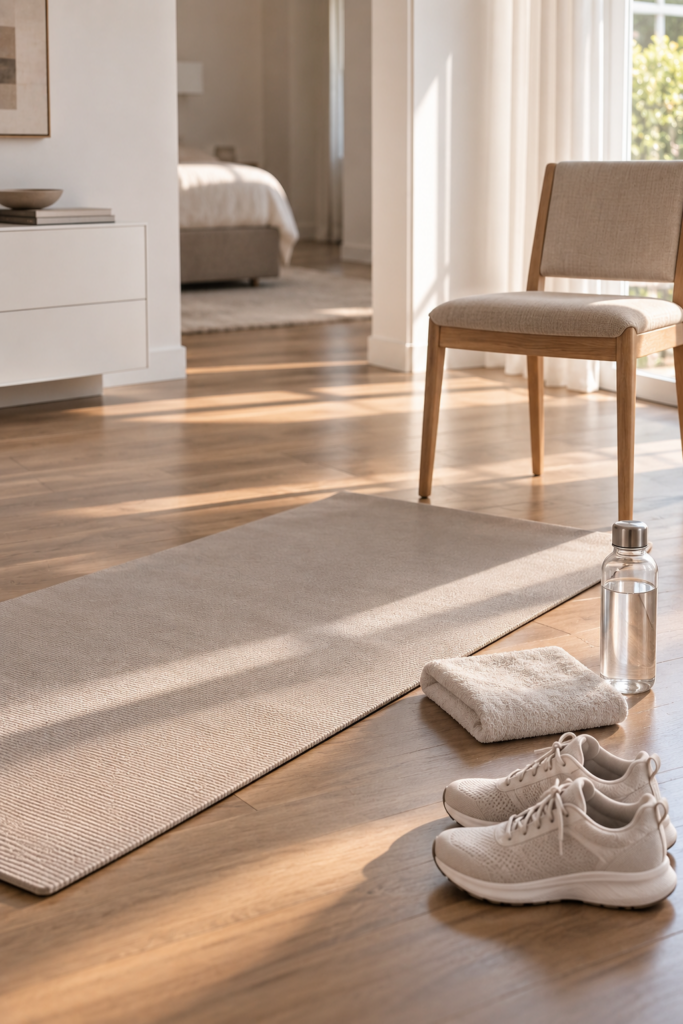
- A clear space on the floor
- A towel or carpet
- Comfortable clothes that let you move
- A stable chair
- A water bottle
- Walking shoes you already own
After you have followed the plan for a few weeks, you can decide if a small purchase would make it easier. A non-slip mat may help if the floor is uncomfortable. A resistance band can add strength options. A mini Pilates ball can add variety later, but it is not essential.
| Product |
|---|
| Non-slip exercise mat |
| Light resistance band set |
| Pilates mini ball |
| Supportive walking shoes |
| Reusable water bottle |
Buy only the item that solves a real problem in your current routine. If your mat slips, a better mat is useful. If you already have a safe, comfortable floor space, wait before buying anything.
For a zero-cost movement structure, read The $0 Millionaire Body Workout Plan: Move More Without Buying Equipment.
Food Habits That Support Your Pilates Routine
Food should support your energy and recovery, not become another extreme rulebook.
You do not need a restrictive plan to begin Pilates. You need enough structure to avoid the cycle of skipping meals, becoming overly hungry, ordering expensive takeout out of exhaustion, and feeling like the day is ruined.
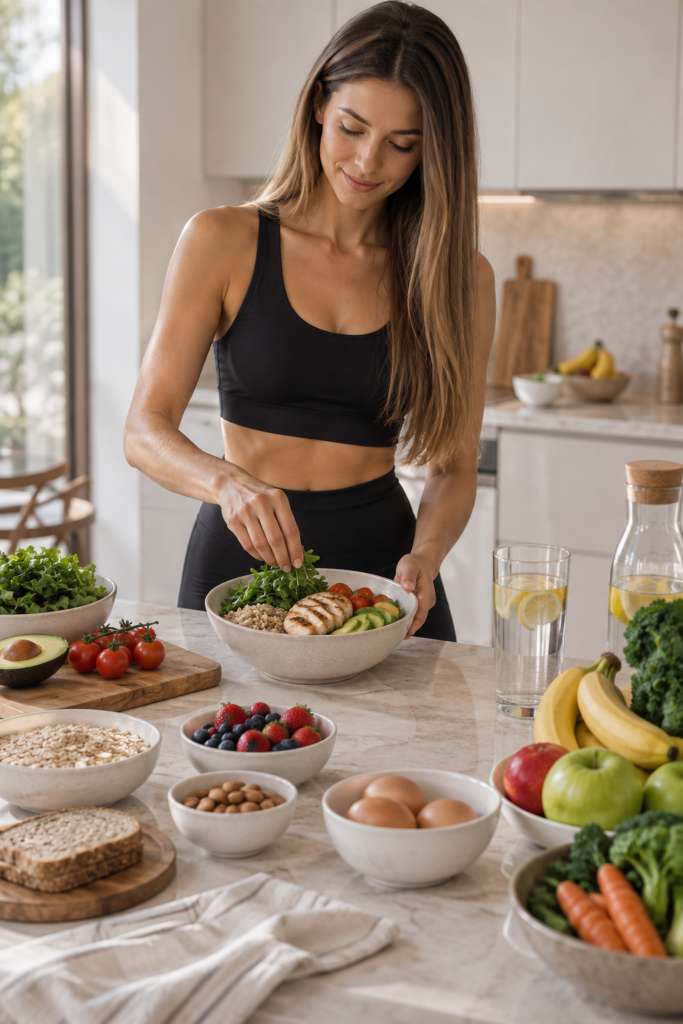
Start with simple habits:
- Eat regular meals that work with your schedule.
- Include protein sources you enjoy and can afford.
- Keep easy carbohydrates available for energy, such as oats, bread, rice, potatoes, pasta, beans, and fruit.
- Add vegetables or fruit in forms you will actually use.
- Keep convenient snacks available for long workdays.
- Drink water regularly.
- Avoid treating food as something you need to earn through exercise.
If your goal includes weight change, avoid crash diets, extreme fasting, purging, diet pills, or compensatory exercise. Sustainable habits are safer and easier to maintain than punishment-based plans.
For simple meals that fit a busy routine, read Pilates Body Breakfasts: Easy High-Protein Ideas for Busy Mornings.
Note: This article is for general lifestyle information, not medical, mental-health, or financial advice. If you have a medical condition, are pregnant, are returning after surgery, have an injury, have a history of disordered eating, or are worried about your relationship with food, exercise, or body image, speak with a qualified professional.
Beginner Pilates Mistakes to Avoid
The biggest beginner mistake is starting a routine that looks impressive but does not fit your life.
You do not need to copy a creator who trains daily, attends reformer classes, cooks elaborate meals, and has a schedule completely different from yours. You need a plan that works with your job, budget, energy, home space, and current fitness level.
Avoid these common mistakes:
- Starting with daily Pilates sessions before you have built a twice-weekly habit
- Pushing through sharp or increasing pain
- Treating soreness as proof that a workout was good
- Expecting Pilates to remove fat from one specific part of your body
- Skipping rest because you think a routine only counts when it is intense
- Buying expensive equipment before you know you enjoy the practice
- Using food restriction to chase a faster physical change
- Comparing your body to instructors, influencers, or edited images
- Restarting from zero after one missed session
A routine is not broken because you miss a day. It is only interrupted. Return at the next available opportunity.
My Beginner Pilates Week
Use this checklist to create a realistic first week. Your progress stays in your browser and is not sent anywhere.
Build a Pilates Routine You Can Keep
The best beginner Pilates plan is not the one with the most sessions, hardest movements, or most expensive equipment. It is the plan that makes movement feel more available in your real life.
Start with two Pilates sessions per week. Add walking around your normal schedule. Let rest count. Include basic strength work when you are ready. Keep your food routine practical enough to support your energy. Use your Sunday reset to make the next week easier.
You are not behind because you are beginning with ten minutes. You are building a routine from the ground up.
A calm, consistent Pilates plan can help you feel stronger, more capable, and more connected to your body without making your entire life revolve around exercise.
FAQ
How many times a week should a beginner do Pilates?
Most beginners can start with two Pilates sessions per week. This gives you time to learn movements, notice how your body responds, and build a routine that fits your life. You can add a third session later if you enjoy Pilates and have the time and energy to recover well. The exact number depends on your current activity level, fitness experience, schedule, health, and goals. Pilates can be combined with walking, basic strength work, and rest days. Start with a frequency that feels realistic for at least two weeks instead of choosing an ambitious daily plan that becomes difficult to maintain.
Is Pilates good for beginners who are out of shape?
Pilates can be a useful option for beginners because many movements can be modified for different levels of fitness and mobility. It often emphasizes controlled movement, posture, balance, flexibility, and body awareness instead of high-impact exercise. Begin with an introductory class or video that clearly demonstrates modifications. Move within a comfortable range and avoid pushing through sharp or increasing pain. If you have a medical condition, injury, recent surgery, pregnancy, chronic pain, dizziness, or concerns about starting exercise, seek individualized advice from a qualified clinician or fitness professional. A short beginner session and regular walks can be a practical way to start moving again.
Can I do Pilates every day as a beginner?
You can do gentle Pilates-inspired mobility or stretching frequently if it feels comfortable, but beginners do not need intense Pilates sessions every day. Two or three planned Pilates workouts per week are enough to begin building a routine. Rest days give you time to recover, especially if you are also walking, strength training, working long hours, or returning after a break from exercise. More exercise is not always better if it causes pain, exhaustion, or makes you quit after a short time. A balanced weekly plan can include Pilates, walking, basic strength work, mobility, and rest. Consistency matters more than doing a perfect daily routine.
Do I need equipment for beginner Pilates?
No, you do not need special equipment to begin Pilates. You can start on a carpeted floor, a folded towel, or any comfortable non-slip surface with enough room to move safely. Comfortable clothes and a stable chair can be helpful for modifications and balance support. A non-slip mat may make floor exercises more comfortable, while light resistance bands can add variety later. Reformer machines, expensive studio memberships, and branded activewear are optional. Start with the simplest setup first. After a few weeks, decide if a low-cost item would solve a genuine comfort or routine problem instead of buying equipment before you know what you will use.
Can Pilates help with weight loss?
Pilates can be part of a weight-management routine because it supports regular movement, strength, mobility, and consistency. It does not guarantee weight loss and cannot target fat loss from one body area. Weight change can be influenced by many factors, including food habits, activity level, sleep, stress, medication, health conditions, and individual biology. Avoid extreme dieting, punishing workouts, and using exercise to compensate for eating. A more sustainable approach includes regular movement you can enjoy, filling meals, adequate recovery, and gradual changes that fit your life. Speak with a qualified professional if weight, food, exercise, or body-image concerns feel distressing or difficult to manage.
Sources
https://www.nhs.uk/live-well/exercise/pilates-and-yoga/pilates-for-beginners/
NHS beginner Pilates resource describing Pilates as exercise focused on balance, posture, strength, and flexibility.nhs
https://www.nhs.uk/live-well/exercise/pilates-and-yoga/
NHS Pilates and yoga exercise resource hub with beginner and condition-specific exercise content.nhs
https://pubmed.ncbi.nlm.nih.gov/27195456/
Study of once-weekly Pilates in sedentary young women, reporting improvements in flexibility, balance, core and abdominal strength, skeletal muscle mass, and body awareness.pubmed.ncbi.nlm.nih
https://www.cdc.gov/physical-activity-basics/guidelines/index.html
CDC overview of physical activity recommendations for adults, including 150 minutes of moderate activity weekly and muscle-strengthening work on two days each week.cdc
https://www.cdc.gov/physical-activity-basics/guidelines/adults.html
CDC adult activity guidance describing aerobic and muscle-strengthening recommendations.cdc
https://www.cdc.gov/physical-activity-basics/adding-adults/what-counts.html
CDC resource explaining that activity can be broken into smaller chunks and describing examples of aerobic and muscle-strengthening activities.cdc


