
Rich Girl Arms Workouts: A Beginner Strength Plan for Stronger, More Defined-Looking Arms
Rich Girl arms workouts are simple strength sessions that build stronger, more defined-looking arms through controlled training, realistic consistency, and good posture—not endless tiny-weight exercises or promises of spot fat loss. This beginner plan uses bodyweight moves, light dumbbells, water bottles, or resistance bands at home or in a gym. Start with two full-body strength sessions each week, add focused arm exercises, and include walking or Pilates for a balanced routine. You do not need expensive classes, matching sets, or a strict diet. The goal is to feel capable, stand taller, and build an affordable routine you can repeat.

What “Rich Girl Arms” Really Means
Rich Girl arms are not a body type, a clothing size, or an unrealistic promise that everyone can achieve the same look.
In this article, the phrase describes arms that look and feel cared for through regular strength work, posture, grooming, clothing fit, and a realistic routine. Many women want arms that feel stronger when carrying groceries, lifting children, moving furniture, working at a desk, or wearing sleeveless tops. That is a practical goal.
You cannot choose where your body loses fat, and no arm workout can spot-reduce fat from one area. Your body shape, fat distribution, muscle mass, genetics, nutrition, sleep, stress, and activity history all influence how your arms look.

Article contains Affiliate links.
You can, however, build upper-body strength over time. You can improve your confidence with pushing, pulling, carrying, and lifting. You can also create a more polished everyday look by choosing clothes that fit well, standing with better posture, and caring for your skin.
The goal is not to punish your arms. The goal is to build useful strength and a routine that helps you feel more capable in your body.
For a full approach to movement, food, grooming, and self-concept, read The Pilates Body Plan: How to Build a Polished Routine on an Ordinary Salary.
Can You Get More Defined-Looking Arms?
You can build arm and upper-body strength through regular resistance training. Over time, building muscle can change how your arms feel and may contribute to a stronger-looking appearance. The visible result varies from person to person.
“Defined-looking” arms are influenced by more than biceps and triceps exercises. Your shoulders, upper back, chest, posture, total-body training, overall activity, and individual body composition all matter. This is one reason a balanced plan works better than doing hundreds of arm movements every day.
Muscle-strengthening activity is recommended as part of an adult physical activity routine. The CDC recommends muscle-strengthening activities that work all major muscle groups on at least two days each week.
You do not need to lift very heavy weights as a beginner. You do need movements that feel challenging enough for your current level, safe enough to repeat, and simple enough to improve gradually.
The first sign of progress may be practical. Your bag feels easier to carry. Wall push-ups feel more stable. You can hold better posture at your desk. Your arms feel less tired while doing normal tasks. Those changes count.
Why a Balanced Arm Plan Works Better
A balanced arm plan trains more than your biceps.
Your arms work with your shoulders, upper back, chest, core, and hands during everyday pushing, pulling, carrying, reaching, and lifting. If you train only your biceps and triceps, you may miss the posture and upper-back strength that helps your upper body feel more stable.
A beginner routine should include:
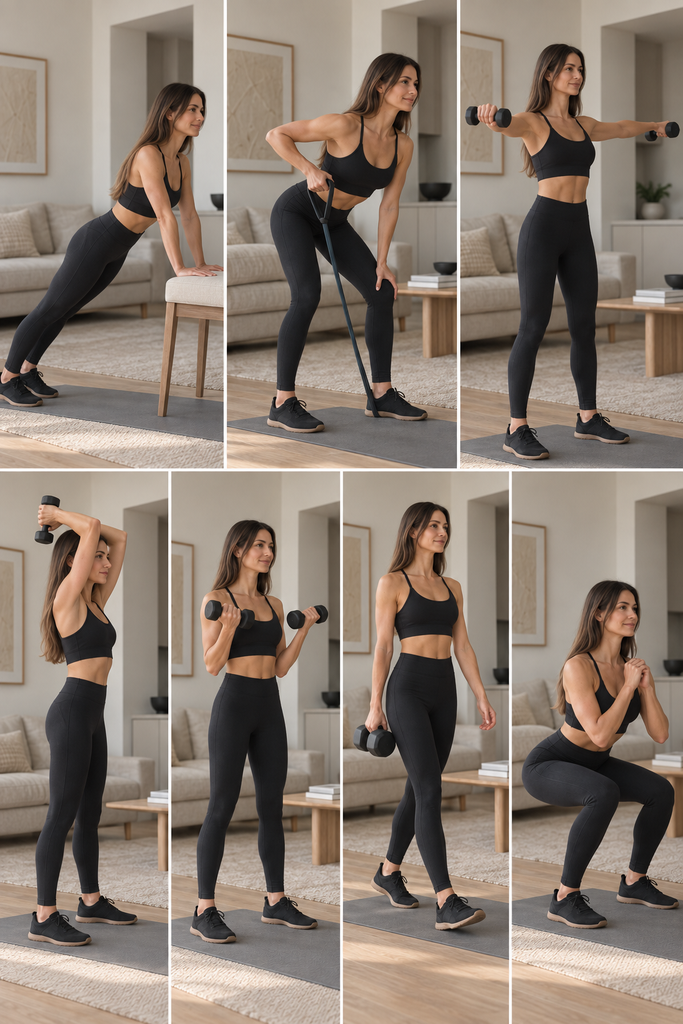
- A push movement for chest, shoulders, and triceps
- A pull movement for upper back and biceps
- A shoulder movement for controlled overhead or side strength
- A triceps exercise for the back of the arm
- A biceps exercise for the front of the arm
- A carry or posture-focused movement when possible
- Basic leg and core movements for full-body strength
The National Institute on Aging notes that muscle-strengthening activities can work major muscle groups, including the legs, hips, chest, back, abdomen, shoulders, and arms. It also recommends avoiding training the same muscle group on consecutive days to allow time for recovery.
A Rich Girl arms routine is not an arms-only punishment plan. It is a strength routine that helps your arms work as part of a capable body.
Find Your Arm Strength Starting Point
Choose your available equipment and preferred workout length. Your result gives you a practical starting structure, not a body prediction or diagnosis.
The Beginner Rich Girl Arms Workout
This workout is a full upper-body strength routine with simple arm-focused movements.
Do it one or two times per week on nonconsecutive days. Begin with one round if you are new to exercise. Add a second round after the movements feel familiar and your recovery feels manageable.
Use dumbbells, resistance bands, filled water bottles, or bodyweight options. Choose a weight or resistance level that feels challenging near the end of the set while still allowing controlled form.
1. Wall Push-Ups
Wall push-ups are a beginner-friendly pushing exercise for your chest, shoulders, and triceps.
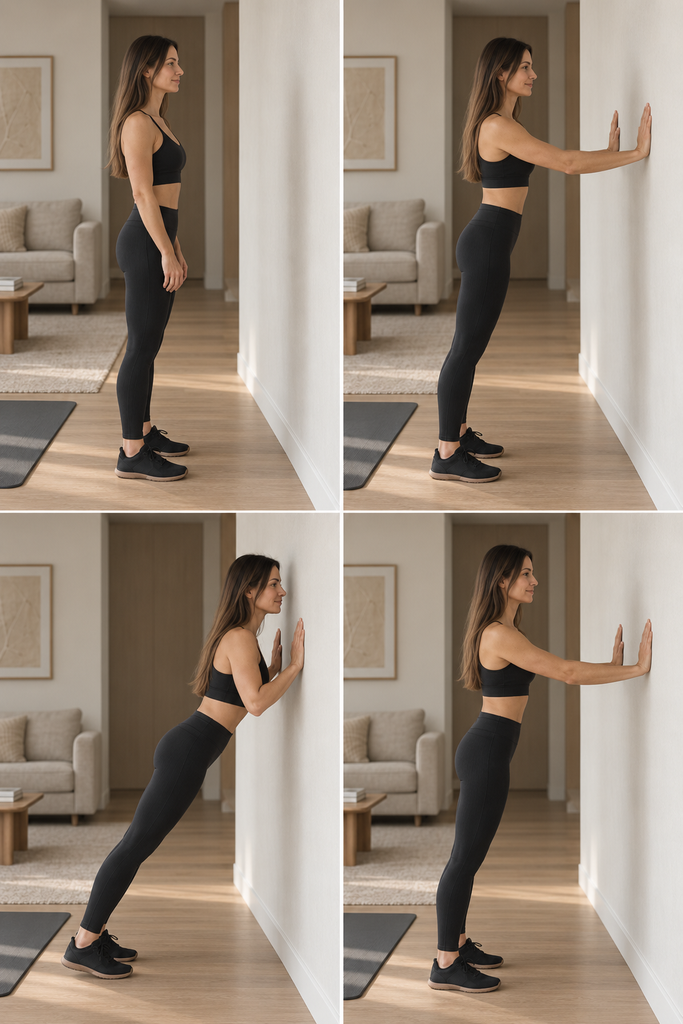
Stand about an arm’s length from a wall. Place your hands on the wall around chest height. Keep your body in a straight line from your head through your hips. Bend your elbows slowly as you bring your chest closer to the wall, then press back to the starting position.
Aim for 5 to 10 repetitions.
As you become stronger, step your feet farther back or move to an incline push-up with your hands on a stable counter, bench, or sturdy table. Avoid using furniture that moves, slips, or feels unstable.
The NHS recommends wall push-ups as a home strength exercise and suggests keeping your back straight as you bend your arms with elbows close to your sides.
2. Resistance-Band or Dumbbell Rows
Rows are pulling exercises that train your upper back and biceps.
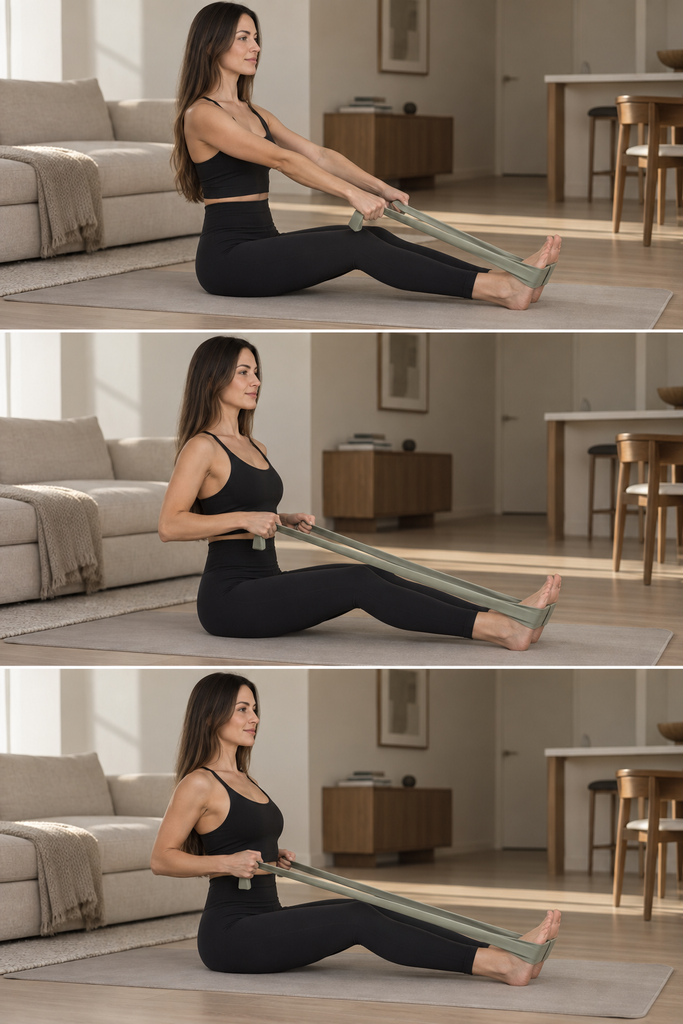
If you have a resistance band, anchor it safely around a stable point or loop it under your feet while seated. Pull your elbows back toward your ribs with control. If you use dumbbells or water bottles, hinge slightly at your hips with a neutral back and pull the weights toward your sides.
Aim for 8 to 12 repetitions.
Think about drawing your shoulder blades gently toward each other instead of shrugging your shoulders toward your ears. This movement can support upper-back strength, which matters for posture and for balancing the pushing work in your plan.
Do not use an unstable door, loose furniture, or anything that could shift while you pull.
3. Biceps Curls
Biceps curls train the muscles on the front of your upper arms.
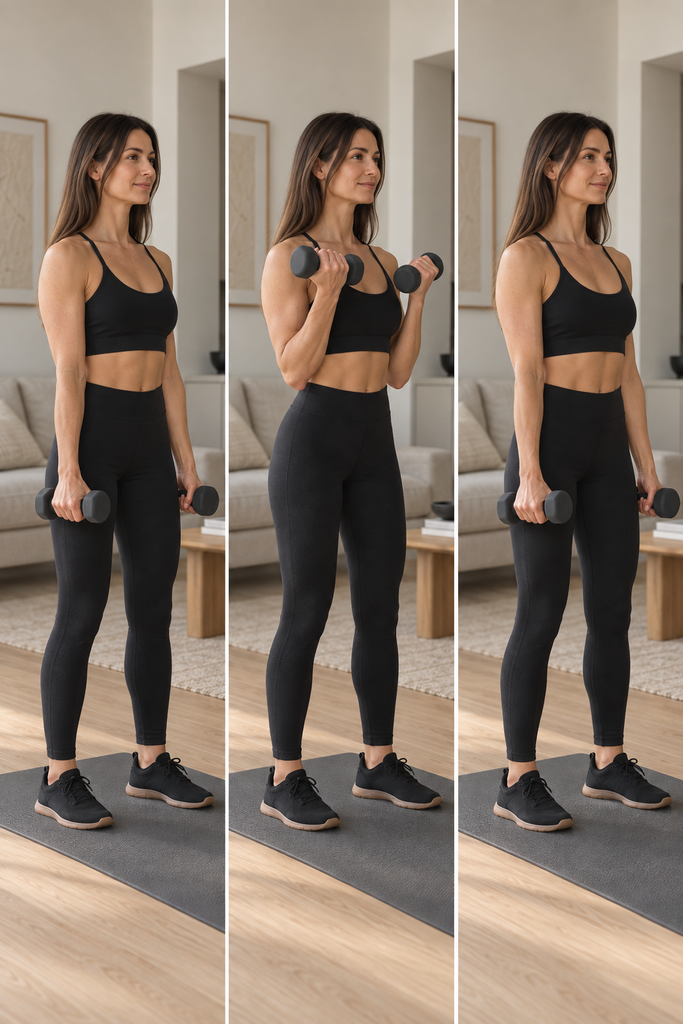
Hold light dumbbells, water bottles, or a resistance band with your arms by your sides. Keep your elbows close to your body. Curl your hands toward your shoulders without swinging your torso, then lower slowly.
Aim for 8 to 12 repetitions.
Start with a light load. The NHS notes that light weights, including filled water bottles, can be used for simple strength exercises and recommends gradually building repetitions over time.
You do not need to lift heavy to start. The goal is controlled movement that you can repeat with good form.
4. Overhead Press
An overhead press trains your shoulders and triceps while asking your upper body to stabilize.
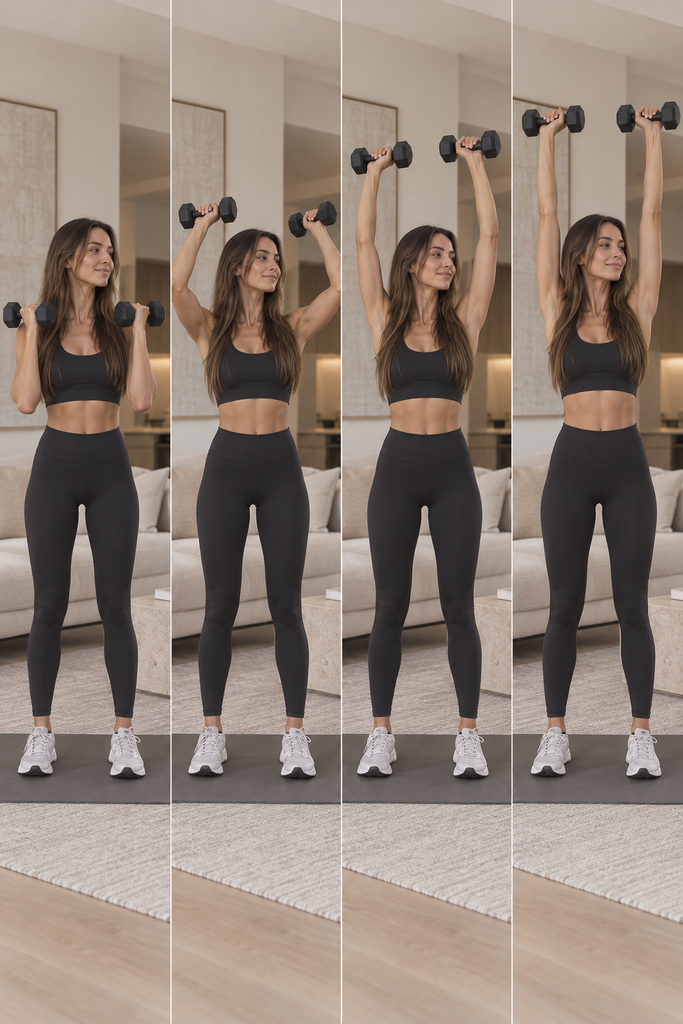
Hold light dumbbells, water bottles, or a resistance band at shoulder level. Stand tall with your ribs relaxed. Press the weights overhead in a controlled path, then lower back to shoulder level.
Aim for 6 to 10 repetitions.
If overhead movement causes shoulder pain, do not force it. You can replace this exercise with a front raise using a light weight, a lateral raise with a very light weight, or an additional set of rows and wall push-ups. A comfortable range of motion matters more than forcing your arms into a position that does not feel right.
5. Triceps Kickbacks or Extensions
Triceps exercises train the muscles at the back of the upper arm.
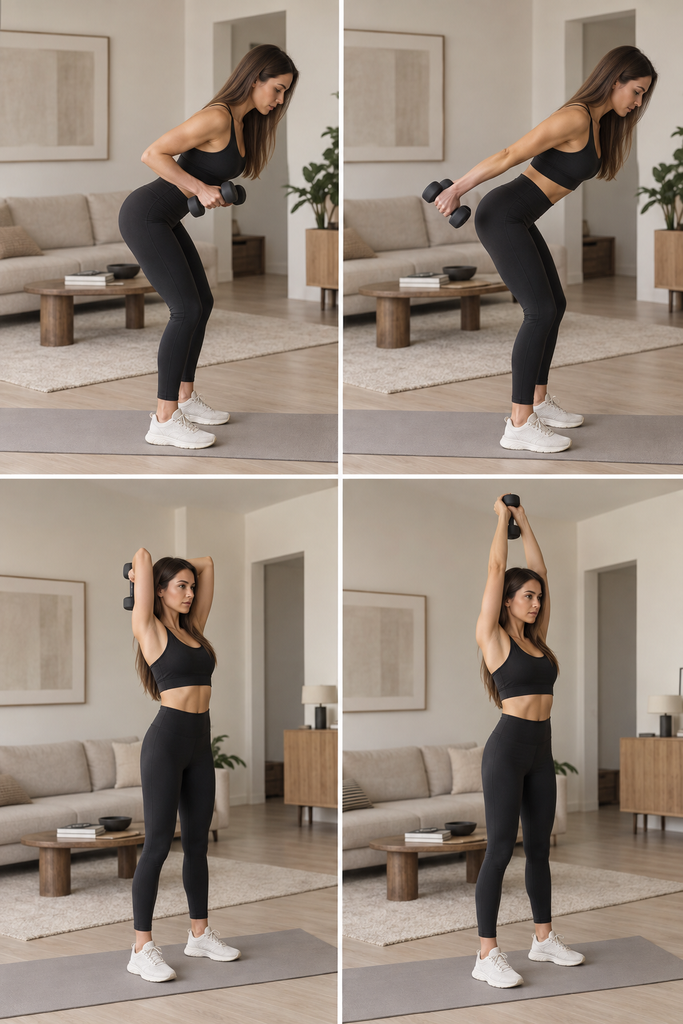
For a triceps kickback, hinge forward slightly from the hips with a neutral back. Hold light weights near your ribs. Extend your arms behind you until your elbows straighten comfortably, then return slowly.
For a standing overhead triceps extension, hold one light dumbbell or water bottle with both hands and extend it overhead from behind your head. Use this version only if it feels comfortable for your shoulders.
Aim for 8 to 12 repetitions.
Keep your shoulders relaxed and avoid rushing. Triceps exercises can feel difficult with light weights because the muscles are small. That is normal. Use control instead of momentum.
6. Suitcase Carry or Grocery-Bag Carry
A suitcase carry is a simple strength movement that builds grip, shoulder stability, posture awareness, and core control.
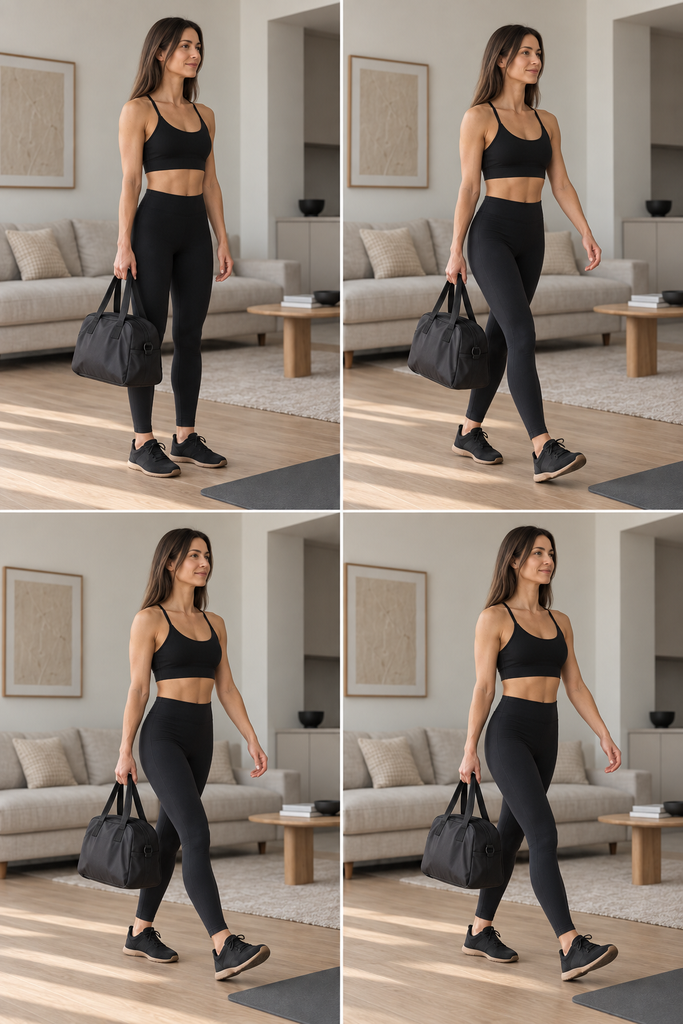
Hold one moderately light bag, dumbbell, or grocery bag at your side. Stand tall and walk slowly across a safe clear space. Keep your shoulders level and avoid leaning toward the weight.
Try 20 to 40 seconds on each side.
This exercise is practical because it resembles real life. It can help you feel steadier when carrying shopping bags, a work tote, or household items. Use an amount you can carry with control. Do not choose a load that makes you strain, hold your breath, or lose balance.
Your Twice-Weekly Rich Girl Arms Schedule
A twice-weekly schedule gives your muscles time to recover between sessions.
You can use this structure at home, in a gym, or with a mix of both. Add walking and Pilates on other days if you enjoy them, but keep at least one lower-demand day in your week.
| Day | Focus | Example |
|---|---|---|
| Monday | Arm and upper-body strength | Wall push-ups, rows, curls, overhead press, triceps work |
| Tuesday | Walking or mobility | Comfortable walk and shoulder mobility |
| Wednesday | Rest or Pilates | Beginner Pilates or a full rest day |
| Thursday | Arm and upper-body strength | Repeat Monday or use a different variation |
| Friday | Walking | Short after-work walk or active errands |
| Saturday | Optional full-body movement | Pilates, lower-body strength, or a longer walk |
| Sunday | Recovery and planning | Light stretch, laundry, meal prep, and schedule review |
You do not need to train arms every day to make progress. Recovery is part of strength-building. If your arms feel unusually sore, reduce the next session, choose gentle movement, or take another recovery day.
For a low-impact routine that complements arm strength, read The Pilates Plan: A Beginner-Friendly Weekly Routine.
How to Make Your Arms Look More Polished
A polished arm look is about more than exercise.
Strength training may help your arms feel firmer and stronger over time, but everyday presentation also influences how you feel in sleeveless clothes, short sleeves, dresses, and photos.
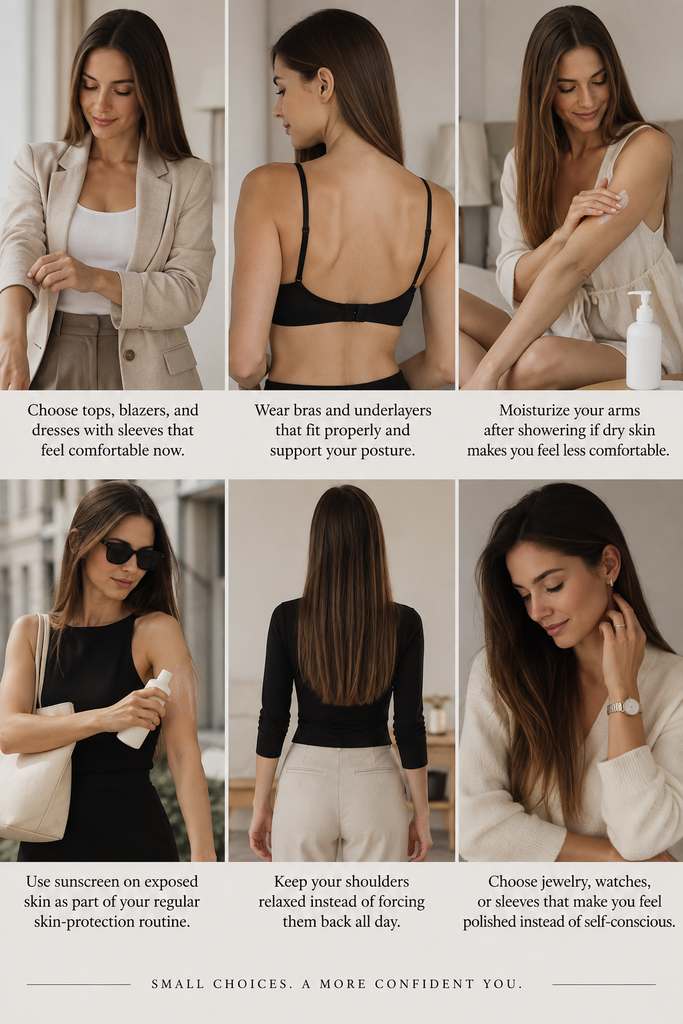
Focus on practical details:
- Choose tops, blazers, and dresses with sleeves that feel comfortable now.
- Wear bras and underlayers that fit properly and support your posture.
- Moisturize your arms after showering if dry skin makes you feel less comfortable.
- Use sunscreen on exposed skin as part of your regular skin-protection routine.
- Keep your shoulders relaxed instead of forcing them back all day.
- Choose jewelry, watches, or sleeves that make you feel polished instead of self-conscious.
- Build overall posture strength through rows, carries, Pilates, and walking.
A “Rich Girl” look should never require you to hide your body until it changes. Dress and care for yourself now, not after reaching an imaginary finish line.
For practical appearance habits that support a maintained everyday look, read The Rich Girl Face Routine: Affordable Habits for a More Polished Everyday Look.
What to Buy for an Affordable Arm Workout
You can start arm strength work without buying anything. Wall push-ups, chair-supported movements, posture exercises, and carrying normal household items can be enough for your first sessions.
If you decide that equipment would make your routine easier, buy one versatile item first. There is no need to purchase a full home gym.
| Product |
|---|
| Light dumbbell set |
| Adjustable resistance band set |
| Non-slip exercise mat |
| Workout gloves for dumbbells |
| Reusable water bottle |
A resistance band is often the most flexible low-cost choice because it can support rows, presses, curls, triceps work, lower-body exercises, and mobility drills. A pair of light dumbbells can also be useful, but filled water bottles may be enough while you learn the movements.
How to Progress Without Overdoing It
Progressive overload means gradually making an exercise more challenging as your strength and confidence improve.
You do not need to increase weight every week. You can progress by doing a few more controlled repetitions, adding a second set, improving your range of motion, slowing the lowering phase, using slightly more resistance, or choosing a more demanding variation.
Try one change at a time:
- Start with one set, then add a second set.
- Move from 5 repetitions to 8 repetitions.
- Move from wall push-ups to higher incline push-ups.
- Add a light resistance band to rows.
- Use a slightly heavier water bottle or dumbbell.
- Hold a suitcase carry for a few more seconds.
- Rest less only after your form remains controlled.
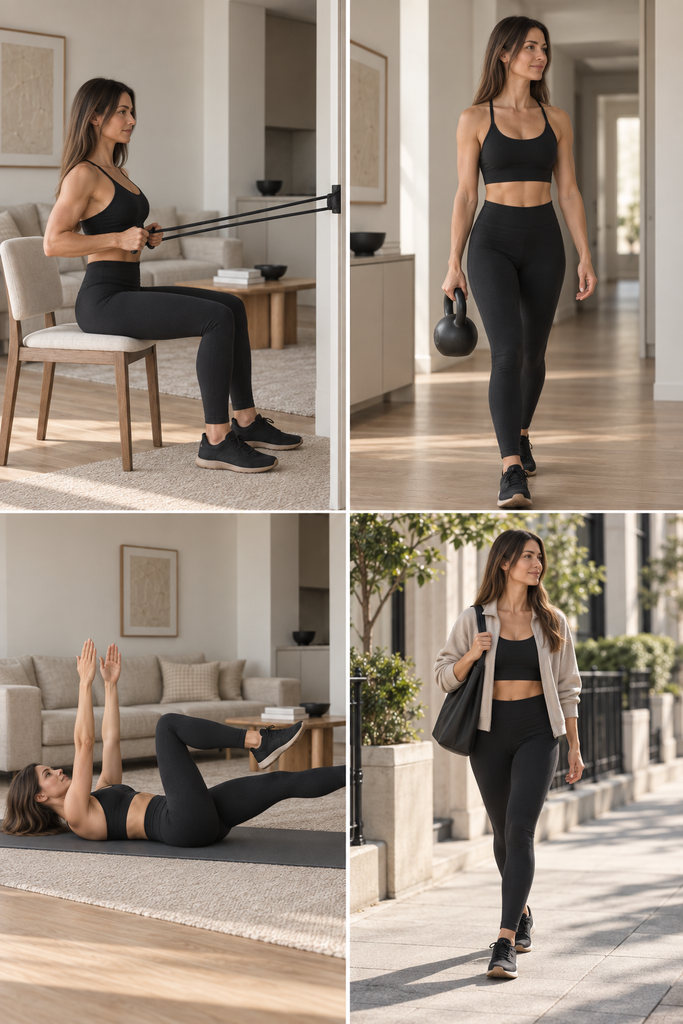
The NHS advises people starting strength exercises to build up slowly and gradually increase repetitions over time.
Do not make progress by ignoring pain, sacrificing form, or training the same muscles hard every day. The plan should become more capable over time, not more punishing.
Common Rich Girl Arms Workout Mistakes
The biggest mistake is believing you need to burn your arms every day to see a change.
Your muscles need training and recovery. Your body also needs enough food, rest, and time to adapt. An intense daily arm challenge can create soreness and frustration without building a routine you can sustain.
Avoid these common mistakes:
- Doing only biceps curls and skipping back, chest, shoulder, and posture work
- Training arms hard every day without recovery
- Swinging weights to make a set feel easier
- Holding your breath while pushing or lifting
- Using a weight that makes your form collapse
- Expecting one exercise to remove fat from your arms
- Skipping meals to chase faster physical changes
- Buying lots of equipment before you have built a habit
- Comparing your beginner body to edited workout content online
- Treating muscle soreness as the only sign of a useful workout
Strength training should not cause sharp pain. The NHS advises stopping exercise immediately if you feel pain or become unwell.
Note: This article is for general lifestyle information, not medical, mental-health, or financial advice. If you have a medical condition, injury, recent surgery, are pregnant, have symptoms that concern you, or have a history of disordered eating, speak with a qualified professional before starting or changing an exercise routine.
My Stronger Arms Week
Use this checklist to plan a balanced beginner week. Your progress stays in your browser and is not sent anywhere.
Build Stronger, More Defined-Looking Arms With Patience
The strongest Rich Girl arms routine is not the one that leaves you sore every day. It is the one you can return to each week.
Start with two upper-body strength sessions. Include a push, a pull, a shoulder movement, biceps work, triceps work, and a practical carry. Use a weight you can control. Let walking, Pilates, food, rest, and posture support the bigger picture.
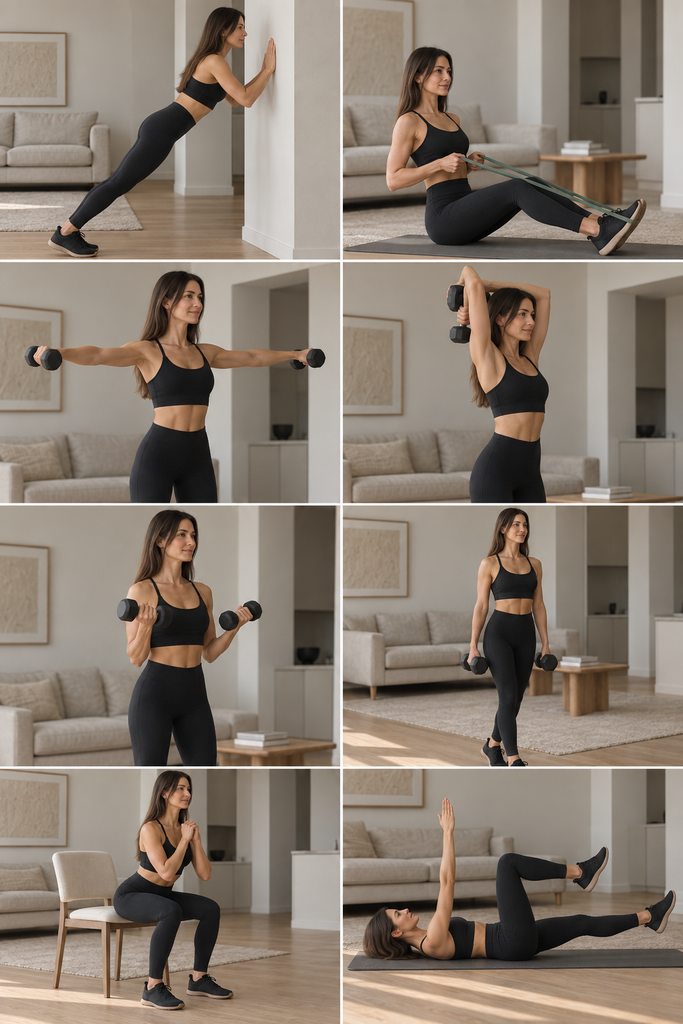
Your arms do not need to earn your confidence. You can wear the sleeveless top, the dress, or the fitted blazer now. Strength training is not a waiting room for your life. It is one practical way to feel more capable while you live it.
FAQ
How often should beginners train arms?
Beginners can usually train arms and upper body one or two times per week on nonconsecutive days. This gives muscles time to recover while you learn form and build confidence with pushing, pulling, carrying, and lifting movements. A balanced upper-body session can include rows, push-ups, presses, curls, triceps work, and posture-focused movements. You do not need to train arms every day. In fact, recovery is part of a useful strength routine. If you are new to exercise, start with one session or one set per exercise, then gradually add more only when your technique and recovery feel manageable. Stop if you feel sharp pain or become unwell.
Can arm workouts get rid of arm fat?
Arm workouts cannot target fat loss from your arms. This is known as spot reduction, and exercise does not let you choose where your body loses fat. Arm workouts can strengthen the muscles in your arms, shoulders, chest, and upper back. Over time, strength training may contribute to a stronger-looking upper body, but visible changes vary based on genetics, body composition, food habits, sleep, activity, health, and other individual factors. A sustainable routine includes full-body movement, muscle-strengthening work, walking or aerobic activity, recovery, and supportive meals. Avoid crash diets, extreme restriction, and punishing exercise routines that make long-term consistency harder.
Do I need weights to build stronger arms?
No, you do not need weights to begin building stronger arms. Wall push-ups, incline push-ups, plank variations, controlled carrying, chair-supported movements, and resistance bands can all challenge your upper body. Filled water bottles can also work as light weights for beginners. Weights and bands can make it easier to increase resistance gradually, but expensive equipment is not required. Start with movements you can perform safely and with control. As you become stronger, you can add repetitions, sets, more resistance, or more challenging variations. The best first tool is one you can use consistently in your home, gym, or regular routine.
How long does it take to see arm strength progress?
The timeline for noticing strength progress varies based on your starting point, workout frequency, exercise technique, sleep, food intake, health, and consistency. Many beginners notice practical changes first, such as carrying bags more easily, feeling steadier during wall push-ups, or having better posture during daily tasks. Visible arm changes may take longer and differ widely among individuals. Instead of setting a deadline around appearance, track actions you can control: completing two strength sessions, using better form, adding a few repetitions, or moving to a slightly more challenging variation. A routine you can continue for months is more useful than a short, intense challenge that creates exhaustion.
Can Pilates help strengthen my arms?
Pilates can challenge your arms, shoulders, and upper body through weight-bearing positions, controlled movements, planks, and resistance-based exercises. It can be a helpful complement to an arm-strength plan, especially if you enjoy lower-impact training and want to work on posture, mobility, and body control. If your goal includes building more overall upper-body strength, add specific pushing and pulling exercises with bodyweight, bands, dumbbells, machines, or other resistance. Pilates and strength training can work well together because each contributes different benefits. Use Pilates for controlled movement and mobility, then include targeted resistance work for broader strength progression.
Sources
https://odphp.health.gov/sites/default/files/2019-09/Physical_Activity_Guidelines_2nd_edition.pdf
Physical Activity Guidelines for Americans: adults should do muscle-strengthening activities involving major muscle groups on two or more days per week.odphp.health
https://www.nia.nih.gov/health/exercise-and-physical-activity/three-types-exercise-can-improve-your-health-and-physical
National Institute on Aging guidance on muscle-strengthening activity, major muscle groups, beginner bodyweight options, repetitions, and recovery between sessions.nia.nih
https://www.nhs.uk/live-well/exercise/strength-exercises/
NHS at-home strength exercise guidance, including wall push-ups, light-weight curls, gradual repetition increases, and practical setup guidance.www
https://www.nhs.uk/live-well/exercise/strength-and-flex-exercise-plan-how-to-videos/
NHS safety information recommending that people stop exercise if pain occurs or they become unwell.