
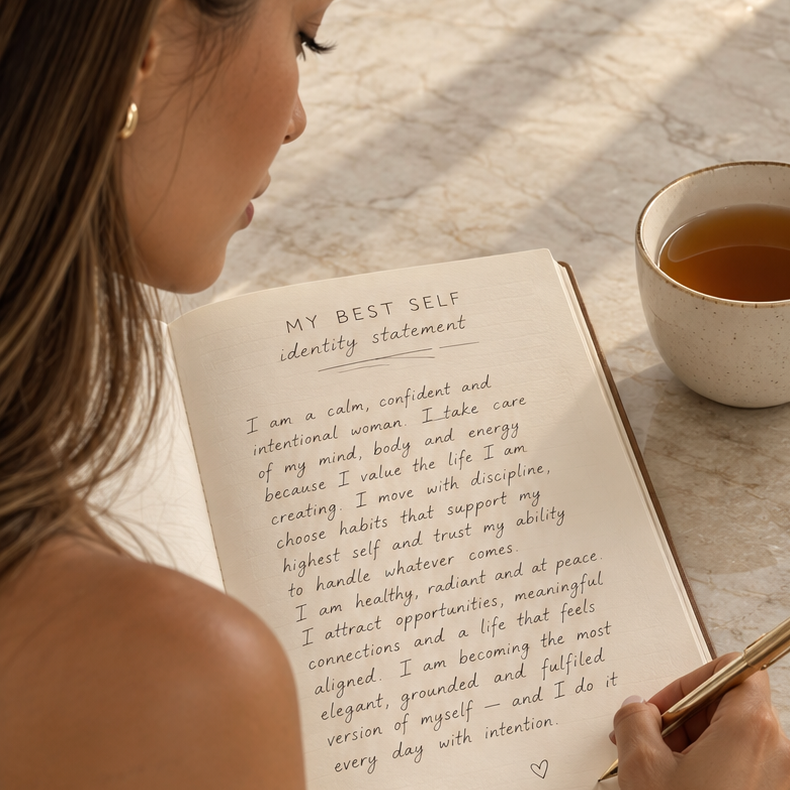
How to Transform Into Your Best Self: A Realistic Plan to Become Her
Becoming your best self is not about turning into a different woman overnight. It is about building a life that reflects your values, standards, energy, health, style, and goals through small actions you can repeat. This realistic plan to become her helps you define the woman you want to be, choose habits that fit your actual life, and recover quickly after imperfect days. Use manifestation as a reflective tool for focus and self-concept, then support it with practical decisions. The goal is not perfection, control, or a flawless aesthetic. The goal is becoming someone you trust, respect, and recognize.

Start With the Right Definition of “Her”
“Her” is not the woman with the most expensive wardrobe, the most productive morning routine, or the most polished social media feed. She is the version of you whose choices are increasingly aligned with what matters to you.
She might be calm under pressure. She might take better care of her body, manage money with more intention, leave situations that drain her, speak more directly, keep promises to herself, or create a personal style that makes her feel composed. Those qualities can look luxurious from the outside, but their real source is self-respect and repeated follow-through.
I think the most powerful transformation begins when you stop asking, “How can I look like her?” and begin asking, “What would she do in this ordinary moment?”
That question brings the entire idea back to real life:
- What does she eat on a rushed Tuesday?
- How does she speak to herself after missing a workout?
- What does she do before spending money online?
- How does she respond when a friendship feels one-sided?
- What does she do when she has low energy but still wants to care for herself?
Your best self is built in these small decisions, not in one dramatic reset.
A realistic transformation also leaves room for your real circumstances. Financial pressure, caregiving, chronic stress, grief, mental-health concerns, work demands, and limited time are not personal failures. Your plan should adapt to your life rather than punish you for having one.

The Best-Self Formula: Vision, Standards, Systems, Action
A sustainable personal transformation has four parts:
- A clear vision of the woman you are becoming.
- Standards that guide your choices.
- Small systems that make those standards easier to keep.
- Real-world action that moves your life forward.
Manifestation can support the first two parts by helping you focus your attention, clarify your values, and rehearse the emotional quality you want to bring into your life. It does not replace medical care, financial planning, direct communication, learning new skills, job applications, movement, rest, or professional support.
A vision without action becomes escapism. Action without a vision can become exhausting. You need both.
Research on “if-then” planning, also called implementation intentions, suggests that deciding in advance when, where, and how you will act can improve follow-through. Instead of saying, “I want to work out more,” you create a plan such as: “If it is 6:15 p.m. on Monday, Wednesday, and Friday, I will put on my walking shoes and take a 20-minute walk before dinner.”sciencedirect+1
That is the energy of becoming her: not waiting to feel perfectly ready, but making your next step obvious.
Build Your “Her” Identity Before You Build a Routine
An identity statement is a practical description of the woman you are becoming. It is not a claim that you are already perfect. It is a direction.
Try finishing this sentence:
“I am becoming a woman who…”
Choose three to five qualities. Keep them behavioral and believable.
Examples:
- I am becoming a woman who keeps simple promises to herself.
- I am becoming a woman who takes care of her body without punishing it.
- I am becoming a woman who protects her peace and communicates clearly.
- I am becoming a woman who spends with intention instead of impulse.
- I am becoming a woman who creates a polished life within her real budget.
- I am becoming a woman who follows through on the work that matters to her.
- I am becoming a woman who rests before burnout decides for her.
Avoid identity statements that depend on controlling another person, a specific outcome, or a fixed deadline. “I am becoming someone who communicates openly and chooses reciprocal relationships” is grounded. “I will make one person love me” is not within your control.
For a softer self-concept practice, you can also read 40 Affirmations for Self-Acceptance: Embrace Yourself Fully and select wording that feels supportive rather than forced.
Your Best-Self Focus Finder
Choose the area that would make daily life feel more supported. Your result is a reflection prompt, not a diagnosis or prediction.
Module 1: Your Best-Self Focus Finder
Purpose: This tool helps the reader identify one realistic area to prioritize first: energy, confidence, appearance, boundaries, or future direction.
Instructions: Choose the statement that feels most true right now, then select “Show My First Focus.”

Step 1: Choose One Transformation Area First
Trying to overhaul your body, finances, friendships, home, career, wardrobe, mindset, and relationships at once usually creates fatigue, not transformation.
Start with one primary area for the next 30 days. This does not mean the rest of your life stops mattering. It means you decide where your attention has the highest value right now.
Choose one:
- Physical energy and health habits
- Self-trust and confidence
- Personal presentation and grooming
- Boundaries and emotional peace
- Career, business, or education
- Financial stability and intentional spending
- Home environment and daily organization
- Relationships and communication
Your first area should solve a real friction point.
For example, if you feel chaotic every morning, your first best-self goal might not be “be more confident.” It might be creating a simple evening reset so you wake up with clothes ready, a clear bag, and fewer decisions. Confidence often grows after repeated evidence that you can support yourself.
If your focus is creating a stronger, more polished physical foundation, start with a routine you can sustain. The Pilates Plan: A Beginner-Friendly Weekly Routine offers a beginner-friendly way to bring consistent movement into your week without making your entire life revolve around exercise.

Step 2: Create Standards Instead of Chasing Moods
A standard is a personal rule that protects the life you want to build. It is not a punishment or an impossible demand. It is a decision that makes your next choice easier.
For example:
- “I do not skip meals all day and then criticize myself for overeating at night.”
- “I do not spend money to soothe feelings I have not named.”
- “I do not keep clothing that makes me feel uncomfortable or unlike myself.”
- “I do not say yes immediately when I need time to decide.”
- “I return to my routine after a difficult day instead of declaring the week ruined.”
- “I make my home easier to live in before I make it prettier.”
Your standards should be compassionate and specific. The point is not to become rigid. The point is to stop negotiating against your own well-being every day.
This is also the difference between a fantasy self and a trusted self. A fantasy self has endless rules, expensive habits, and no difficult days. A trusted self has a few clear standards and knows how to restart.

Step 3: Design a Minimum Version of Every Habit
Your best self needs habits, but your habits need a “minimum version” for real life.
A minimum version is the smallest action that keeps the identity alive on a hard day.
Examples:
| Full routine | Minimum version |
|---|---|
| 45-minute workout | 10-minute walk or mobility routine |
| Cook a balanced dinner | Add a protein and produce option to a simple meal |
| Full skincare routine | Cleanse and moisturize |
| One-hour project session | Open the document and work for 10 minutes |
| Weekly budget review | Check your account balance before buying anything nonessential |
| Complete home reset | Put away ten items and clear one surface |
| Journal for three pages | Write one honest sentence |
The minimum version prevents the all-or-nothing pattern: “If I cannot do it perfectly, I will do nothing.”
Small, realistic goals are often easier to sustain than ambitious plans that demand a total lifestyle change immediately. NHS guidance on goal-setting emphasizes creating goals that are specific, achievable, realistic, and time-bound, then starting small enough to build consistency.abuhb.nhs+1
You do not need to prove discipline by making life harder. You need to build evidence that you can return to yourself.

Step 4: Use the “Future Her” Filter for Decisions
The future-self filter is a simple pause before a choice. Ask:
“What would support the woman I am becoming?”
This is not about denying yourself every pleasure. It is about moving from automatic behavior to intentional behavior.
A few examples:
- Instead of: “I should buy nothing ever.”
- Try: “Would my future self rather have this item, or the financial space it takes away?”
- Instead of: “I need a perfect body.”
- Try: “What movement would make me feel stronger, calmer, or more capable today?”
- Instead of: “I need everyone to like me.”
- Try: “What response protects my dignity and reflects my values?”
- Instead of: “I need to fix my whole apartment.”
- Try: “What five-minute action would make tomorrow morning easier?”
- Instead of: “I need to become a new person.”
- Try: “What is one decision my current self can make in support of her?”
The future-self filter is especially useful around impulse spending, comparison, procrastination, and people-pleasing. It gives you a pause long enough to choose differently.
If personal standards are the area you want to strengthen, read 9 Quiet Habits of Women Who Never Lower Their Standards for practical examples of what self-respect can look like in daily life.

Step 5: Make Your Environment Work for You
Environment often matters more than motivation because it influences what happens by default.
You can make your desired identity easier to access by reducing friction.
Try these practical changes:
- Put walking shoes near the door.
- Keep a water bottle where you work.
- Prepare one breakfast option you genuinely enjoy.
- Keep your journal, planner, or book visible.
- Create a “next action” note for your biggest goal.
- Put your phone charger away from your bed.
- Keep a donation bag in your closet for clothing that no longer fits your life.
- Make a simple list of reliable outfits instead of deciding from scratch every morning.
- Unfollow accounts that make you feel inadequate, frantic, or pressured to spend.
- Set up automatic savings or bill payments if your finances allow it.
A polished life is rarely made of constant willpower. It is made of fewer unnecessary decisions.
For example, your “become her” wardrobe does not have to begin with a shopping spree. Start by identifying three outfits that make you feel capable, comfortable, and like yourself. Take photos of them. Notice what they have in common: silhouette, colors, shoes, grooming, or accessories. That information is more useful than buying random items in the hope that confidence will arrive with them.

Step 6: Practice Visualization With Reality Attached
Visualization can be a useful reflective practice when it helps you clarify your values and rehearse a more supportive way of showing up. It becomes less useful when it replaces action or tells you that difficult circumstances are your fault.
Use a short, grounded visualization:
- Sit somewhere quiet for two minutes.
- Picture one ordinary scene from your desired life.
- Focus on behavior, not a dramatic outcome.
- Notice how you want to feel in that moment.
- Ask what action supports that version of you today.
Picture yourself waking up in a room that feels peaceful enough for your real life. Imagine making breakfast without rushing, getting dressed in clothes you prepared, checking your priorities, and beginning one meaningful task. Then return to the present and do one part of that scene now.
For a more structured practice, see The Ultimate Guide to Manifesting Your Dream Life Through Visualization. Use visualization to clarify your direction, not to avoid the steps your direction requires.

Step 7: Build a Weekly Reset, Not a Perfect Daily Routine
Daily routines are helpful, but weekly resets are often more realistic. A weekly reset gives you a moment to return to your priorities before life becomes reactive again.
Choose one day or evening each week. Give yourself 20 to 45 minutes.
Your reset can include:
- Check your calendar and identify your three most important priorities.
- Choose movement times that work with your actual schedule.
- Plan simple meals or grocery basics.
- Prepare two or three reliable outfits.
- Do a quick bag, desk, and bedroom reset.
- Review recent spending without shaming yourself.
- Write one boundary you need to keep this week.
- Decide on one action that supports your larger goal.
- Choose one way to make the week feel more enjoyable.
The point is not to create an immaculate life. The point is to reduce avoidable stress.
Setbacks are part of behavior change. A missed workout, an unplanned purchase, an unproductive afternoon, or a hard conversation does not erase your progress. Research on self-compassion links it with adaptive coping and health-promoting behaviors, which supports the idea that a kinder reset can be more useful than harsh self-criticism.pubmed.ncbi.nlm.nih+1

Step 8: Track Evidence, Not Just Outcomes
Many women abandon a transformation because they are looking only for the final outcome: a certain body, income, relationship, career title, home, or version of confidence.
Track evidence instead.
At the end of each day, write:
- One choice that aligned with the woman I am becoming.
- One thing that made that choice easier.
- One adjustment I can make tomorrow.
Examples:
- “I went for a ten-minute walk even though I did not feel like exercising.”
- “I waited 24 hours before buying something I saw online.”
- “I told someone I needed more time instead of agreeing immediately.”
- “I cooked a simple meal instead of criticizing myself for not cooking an elaborate one.”
- “I applied for one opportunity instead of spending an hour imagining a different life.”
This is not a performance review. It is proof that you are changing through action.
Your life may not look dramatically different after one week. But you can feel different when you have seven days of evidence that you have been showing up for yourself.

A Realistic 30-Day “Become Her” Plan
Days 1–3: Define Her Clearly
Write down:
- The three qualities you want to embody.
- One area of life that needs your attention first.
- Three standards that protect your peace, health, time, or money.
- One small habit that supports each standard.
Example:
- Quality: Calm
- Standard: I do not begin my day on social media.
- Habit: I keep my phone outside my bedroom until I am dressed.
Days 4–7: Make the First Habit Easy
Choose one habit and create its minimum version.
If your goal is movement, your full habit may be a gym session. Your minimum version may be putting on shoes and walking for ten minutes.
If your goal is confidence, your full habit may be journaling. Your minimum version may be writing one sentence: “Today, I kept my promise to myself by…”
Repeat the minimum version until it feels normal.
Week 2: Upgrade Your Environment
Choose one area that creates daily friction.
It might be your bedroom, closet, kitchen, bathroom, handbag, desk, or phone.
Spend one focused session making it easier for your future self to succeed. Remove clutter, prepare supplies, create a visible reminder, and set up one system you can maintain.
Week 3: Practice Visible Self-Respect
This week, focus on actions that reinforce your standards.
You might:
- Say no without writing a long explanation.
- Make one appointment you have been delaying.
- Review a bill or financial document.
- Put away clothing that no longer serves you.
- Stop checking someone’s social media.
- Schedule a walk, workout, or rest evening.
- Send a message connected to your work or future plans.
Choose a task that makes you feel more responsible for your own life.
Week 4: Review and Refine
At the end of 30 days, ask:
- What did I actually do consistently?
- What was too complicated?
- What became easier?
- What needs more support?
- Which standard made the biggest difference?
- What is the next small upgrade?
Do not turn the review into a reason to criticize yourself. Use it to create a better plan.
Build Your 7-Day Become Her Plan
Pick one focus and a realistic amount of time. This planner creates a flexible practice, not a test of your worth or discipline.
Missed a day? Restart with the smallest version of the plan. Consistency grows through returning, not through perfection.
Module 2: Your 7-Day Become Her Planner
Purpose: This practical planner turns the article into one small, repeatable weekly commitment.
Instructions: Select your focus and your available time, then choose “Build My 7-Day Plan.”
What “Becoming Her” Is Not
A realistic transformation does not require:
- Spending beyond your means to look successful.
- Restricting food, overtraining, or treating your body like a project that must be fixed.
- Pretending you are happy when you need support.
- Using manifestation to avoid difficult conversations or practical decisions.
- Becoming colder, thinner, quieter, more available, or more agreeable to be worthy.
- Copying another woman’s lifestyle exactly.
- Being productive every hour.
- Having a perfect routine after one bad day.
- Waiting until you feel confident before you act.
You can want beauty, money, fitness, love, career progress, a peaceful home, and a more elevated lifestyle. Those desires are not shallow. The important question is how you pursue them.
The most supportive path usually builds your capacity rather than draining it. It helps you become more capable, more informed, more rested, and more honest with yourself.

How to Know Your Plan Is Working
Your plan is working when you notice more of these changes:
- You recover faster after an off day.
- You make fewer choices from panic or comparison.
- You have a clearer sense of what matters to you.
- Your home, schedule, wardrobe, meals, or finances feel a little easier to manage.
- You trust yourself to handle small responsibilities.
- You feel more able to say no.
- You are less interested in proving yourself and more interested in supporting yourself.
- You take practical action before you feel fully ready.
- You treat your future self as someone worth preparing for.
Outer changes may follow: better energy, more consistent movement, a more intentional appearance, stronger work habits, or a calmer environment. But the deepest shift is internal. You become someone who does not abandon herself at the first sign of discomfort.
Conclusion: Become Her by Returning to Yourself
Your best self is not waiting at the end of a flawless transformation. She is built every time you make one supportive choice, keep one manageable promise, set one honest boundary, or begin again after a difficult day.
Start with one area. Choose one standard. Create one habit small enough to repeat. Let manifestation support your focus, and let real action support your future.
For a practical next step, choose your 7-day plan above and begin with Day 1 today. Your life does not need a dramatic reinvention to change. It needs a version of you who is willing to return, again and again, to what matters.
FAQ
How do I become the best version of myself?
You become the best version of yourself by choosing a clear direction, practicing a few supportive habits, and returning to them after imperfect days. Start by defining the qualities you want to embody, such as calm, self-respect, strength, consistency, or courage. Then connect each quality to one behavior you can repeat. For example, self-respect may look like preparing meals, leaving draining situations, reviewing your spending, or keeping a bedtime routine. Focus on actions within your control. The goal is not to become flawless; it is to build evidence that you can care for yourself and follow through.
How can I become “that girl” without spending a lot of money?
You can become “that girl” without spending a lot of money by focusing on systems instead of purchases. Start with sleep, movement, simple meals, hydration, grooming basics, clothes you already feel good in, a tidy daily environment, and boundaries around spending. Choose one low-cost habit that makes you feel cared for, such as preparing outfits the night before, walking regularly, maintaining your nails at home, keeping a simple skincare routine, or creating a weekly reset. Personal polish comes more from consistency and intention than from constant shopping. Build your version around your real budget, needs, and priorities.
How long does it take to transform yourself?
There is no fixed timeline for personal transformation because different changes require different levels of time, support, resources, and practice. You may feel a shift in clarity after one honest decision, while a new habit or a larger life change can take longer. Rather than measuring success by a dramatic deadline, look for evidence of progress: you restart more quickly, keep more small promises, prepare for your future, and make choices that align with your values. A 30-day plan can help you begin, but it is not a deadline for becoming complete. You are building a relationship with yourself, not racing toward perfection.
Can manifestation help me become my best self?
Manifestation can help as a reflective practice for clarifying your values, focusing your attention, and connecting your daily actions to the life you want to build. Visualization, journaling, gratitude, and affirmations may support motivation when they are paired with practical action. Manifestation cannot guarantee a specific job, relationship, income, body, or external outcome, and it should not replace professional medical, mental-health, legal, financial, or career support. Use it to strengthen your sense of direction. Then take grounded steps: learn skills, communicate honestly, seek support, manage your resources, and make decisions that are within your control.
What should I do when I fall off my routine?
When you fall off your routine, restart with the smallest version of the habit instead of trying to compensate with an extreme plan. If you missed workouts, take a short walk. If your home feels chaotic, clear one surface. If you overspent, review the purchase without shaming yourself and pause nonessential spending for a day. If you avoided a goal, work on it for five or ten minutes. Setbacks are information, not proof that you cannot change. Ask what made the habit difficult, adjust the system, and begin again. Self-compassion can support healthier coping and more health-promoting behavior after setbacks.
